Misophonia sound Recognition using PaSST
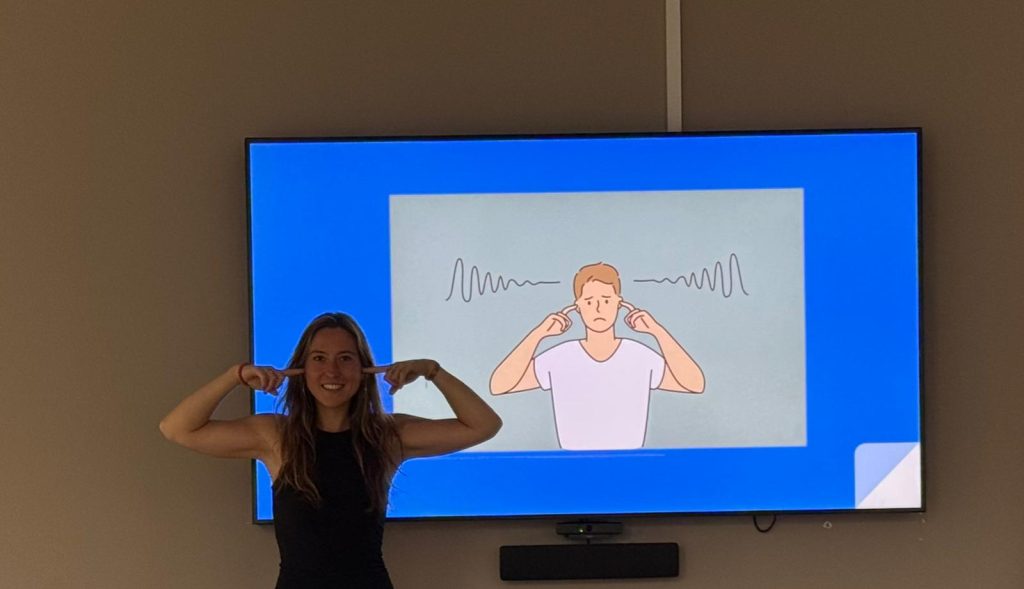
For my Master’s thesis in Media Technology, I researched how machine learning can help people with misophonia — a condition where everyday sounds like chewing, sniffing, or tapping trigger strong negative emotions.
Approach & Findings
I trained and tested a transformer-based audio model (PaSST) to recognize these “trigger sounds.” By extending an existing dataset with new recordings of common misophonia sounds, I showed that PaSST achieves state-of-the-art accuracy in detecting triggers. Importantly, the model still performed well even on very short audio clips, showing its potential for real-time use.
Impact
This project demonstrates how AI can contribute to future therapeutic tools, such as adaptive noise-cancelling headphones that automatically reduce only the sounds that cause distress.
Bachelor Thesis – Parsons Problems in Hedy
For my Bachelor thesis in Computer Science, I designed and implemented a new interactive learning level for Hedy, a gradual programming language that helps children learn Python. My focus was on designing a clear, accessible, and engaging user experience for novice programmers.
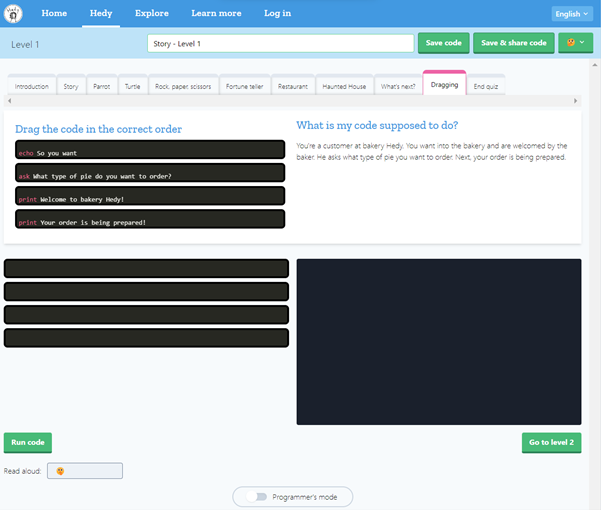
I designed a drag-and-drop puzzle (Parsons Problem) in which children arrange code blocks in the correct order. The goal was to make programming concepts easier to understand by reducing cognitive load. The design was carefully aligned with Hedy’s existing visual style and learning principles.
The Parsons Problems were tested with children aged 11–12 through usability testing, screen recordings, observations, and interviews. Most children immediately understood how to use the puzzle, and the results showed that the design helped reveal where users struggled with specific programming concepts.